Case studies
Who is the Owner of Xcaret, Meet the Mastermind From Which Xcaret Was Born
People in Mexico City will remember the billboards on different avenues that read: When you go to Xcaret, be sure to visit Cancun Miguel Quintana Pali is the fo
People in Mexico City still remember the billboards on different avenues that read: "When you go to Xcaret, be sure to visit Cancún." Miguel Quintana Pali is the founder, and today, one of the most innovative and recognized tourism entrepreneurs in the country and the world.
From Pali to "parquero"
Quintana Pali defines himself as a "parquero" (park-maker). In 1991 he decided to sell Pali — a design store famous for its lamps — to dedicate himself, alongside his partners, to the development of Xcaret Park, officially inaugurated in December 1990. Today it is one of the most important destinations in Quintana Roo.
Grupo Xcaret brings together different concepts — Xel-Há, Xoximilco, Xavage, Xenses and Xplor — as well as tours to Chichén Itzá and Tulum. The group has welcomed nearly 50 million visitors in its history.
It continues expanding into other tourism businesses, such as Hotel Xcaret México (inaugurated in 2017), which currently records an average annual occupancy of 85% with more than 586,000 guests.
"México Espectacular" and social impact
Among Xcaret's unique attractions is the show "México Espectacular," seen by 22.5 million people across more than 10,000 performances. It involves Papantla flyers, ball-game players, singers, mariachis, pre-Hispanic dancers, riders, charros and amazons.
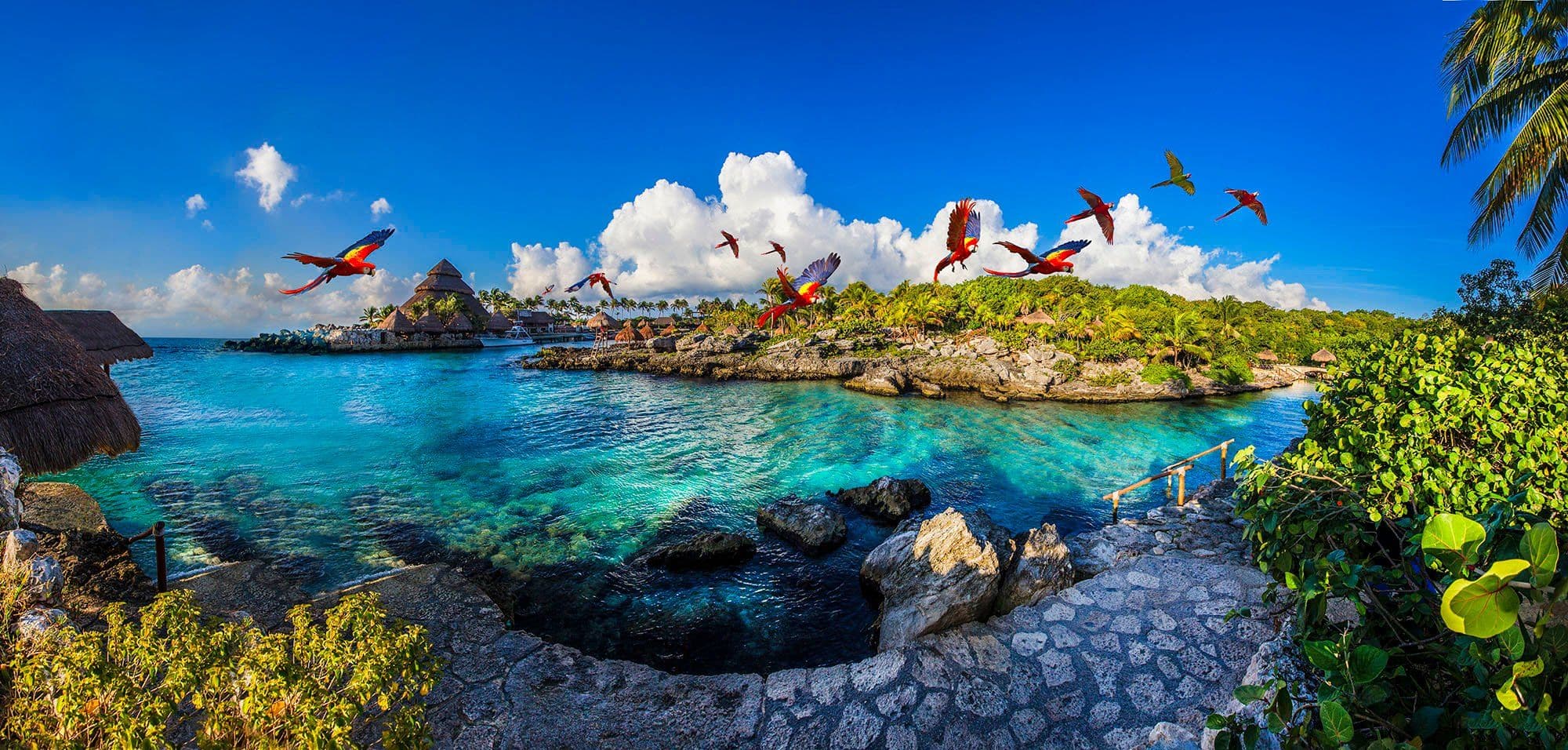
Xcaret has also carried out diverse social work — from supporting neighboring communities to rescue programs for scarlet macaws, sea turtles, pink flamingos and jaguars.
What's next: a sustainability park
Quintana Pali — "the Architect" to those close to him — currently has in mind the creation of a new park dedicated to sustainability, operating with its own wind and solar energy. In his most recent parks, Xenses and Xavage, you can already appreciate more elaborate architectural designs and attractions: an anti-gravity ride, an artificial fast river — creativity and engineering taken to the limit while leveraging existing resources.
Future projects involve large excavations for tunnels and rivers. "With the machinery we've used to date it isn't possible to build these parks, but we've already researched newer, more efficient and faster machinery," he says.
What makes the difference
For Quintana Pali, Grupo Xcaret's concept continues to succeed because they dared to do different things in a tourist destination as important as Quintana Roo. He claims there is nothing in the world equal to Xcaret's offer — including the "all fun inclusive" concept, which combines hotel lodging with access to all parks and tours.
They've been so innovative that, throughout their history, they've championed legislation and procedures that did not exist before — particularly around ecology.
Cooperation with regional development
Xcaret is proof that destinations like the Riviera Maya don't have to be only "sun and beach" — there is room for other types of experience. The group also works to support local suppliers and those from neighboring states, with knock-on effects on local agriculture and handicrafts.
Continued growth
Grupo Xcaret's growth doesn't stop — they're now building a second hotel with 63 boutique rooms. Expanding throughout the Yucatán Peninsula is another stated objective.
His advice: take the risk
There are people who have ideas, but don't take the plunge. To them I recommend they develop a methodology to turn ideas into reality.
— Miguel Quintana Pali, founder of Grupo Xcaret.
He says entrepreneurs must do things differently, uniquely and better to succeed — something very possible in today's age. His book "Xueños: The story behind Xcaret, the best park in the world" is available in bookstores and in electronic and audiobook formats.
In summary
Xcaret is a textbook case study for the Riviera Maya: a single conviction ("there's room for something different here"), executed with patience over 30+ years, that became a multi-park ecosystem, a hotel, and a regional jobs engine. For investors, it's the proof that bold positioning pays off in this market.